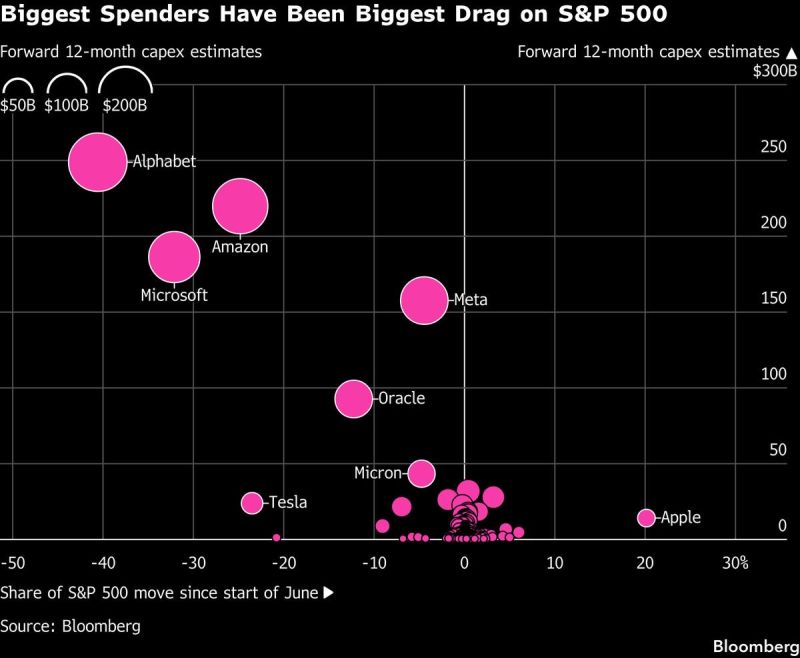

Nasdaq 100 Equal-Weight eyes historic divergence. Equal-weighted tech heads for worst month ever relative to S&P 500 Equal-Weight.
Source: HolgerZ, Bloomberg
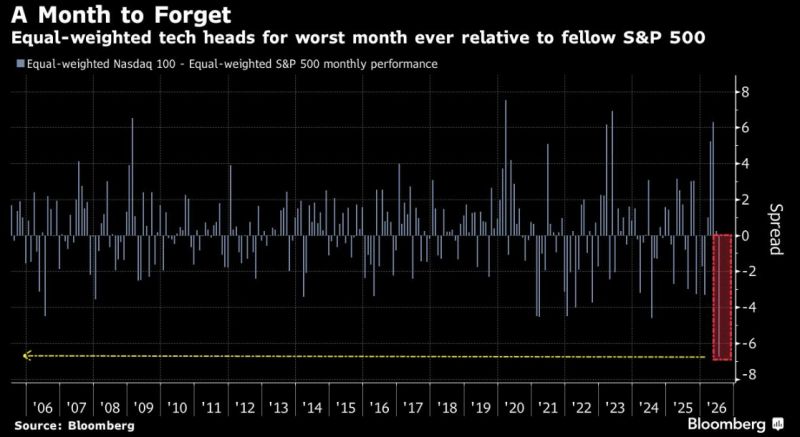
Per Charles Schwab: Weird times for the Tech sector.
On average (so far) this earnings season, a Tech stock that beats EPS estimates is underperforming the S&P 500 by 3.3% the day of/after reporting. Source: Charles Schwab, RBC
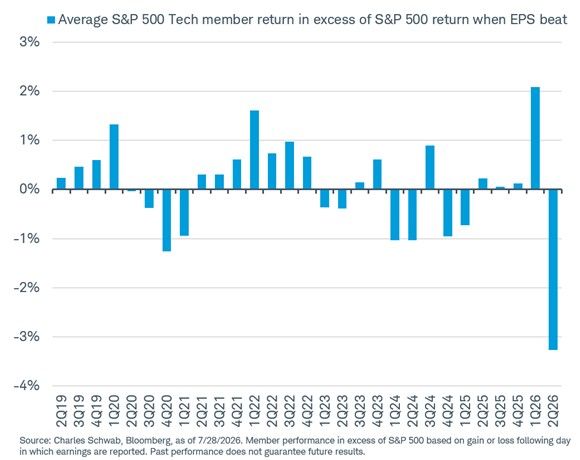
Hyperscalers correlation to the NDX
Source: Goldman Sachs
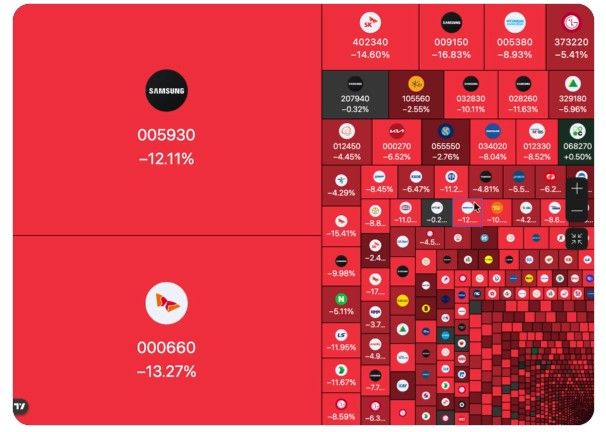
SOUTH KOREA'S STOCK MARKET JUST HIT THE CIRCUIT BREAKER... AGAIN.
The KOSPI plunged 8%, triggering a market-wide trading halt for the 9th time this year. Roughly ₩500 trillion in market value disappeared in a single session. Three major shocks hit at once: • China's DUV chip breakthrough is raising concerns that South Korea's long-held memory chip advantage could come under pressure. • A US semiconductor selloff, driven by fresh questions around Nvidia's financing structure, spilled into Asia. Samsung and SK Hynix both dropped more than 12–14%. • Iran denied reports of peace talks with the US, reigniting geopolitical fears and pushing investors into risk-off mode. The impact is amplified because Samsung and SK Hynix account for more than half of the KOSPI's market capitalisation. When the chip giants fall, the entire index follows. Adding fuel to the selloff, record retail leverage is forcing liquidations, accelerating the decline and turning a sharp correction into a full-scale market rout. Source: The Macro Paper
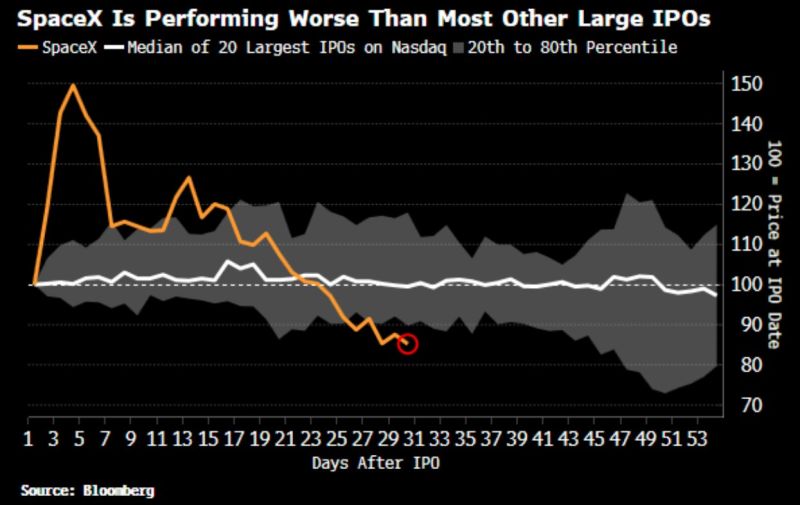
SpaceX, $SPCX, is down -50% from its peak.
Source: Hedgeye
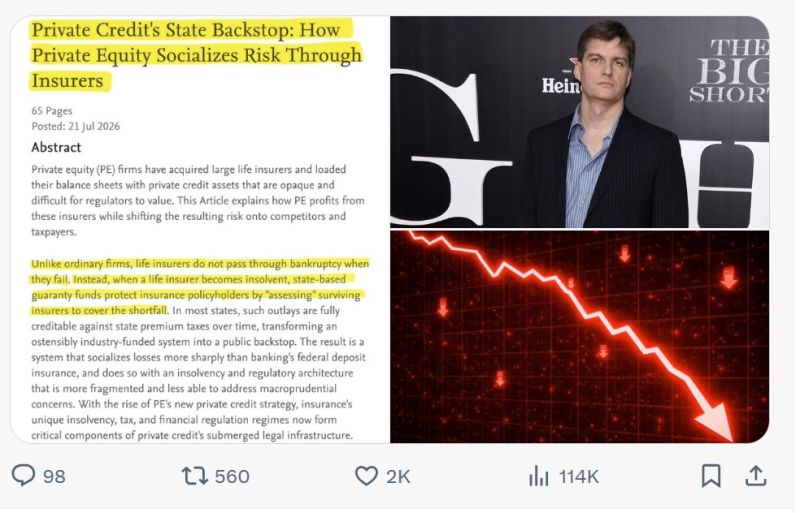
Michael Burry is warning that private equity may have found a way to shift losses onto the public.
Apollo, KKR and Blackstone have acquired life insurers and loaded them with $849 billion of hard-to-value private credit, more than double the 2014 level. If an insurer fails, state guaranty systems protect policyholders. The cost is initially borne by other insurers, but they can offset those payments against state taxes, ultimately reducing public tax revenue. The risk is no longer theoretical. Bankruptcies such as First Brands and Tricolor exposed valuation problems in private credit. Burry argues AI could be the next test, as data centre financing increasingly relies on similar opaque debt structures. If those investments disappoint, the losses may extend well beyond Big Tech and into the insurance system that ultimately protects millions of policyholders. Source: Bull Theory
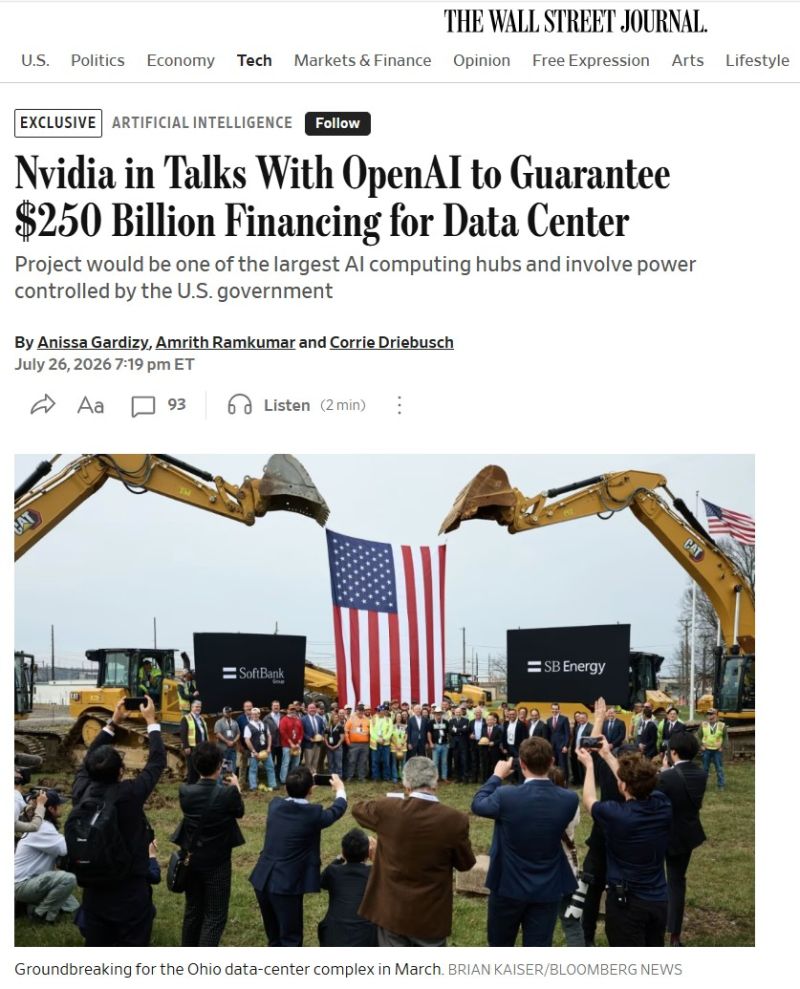
WSJ: "Nvidia $NVDA is in talks to provide a roughly $250 billion backstop for OpenAI as part of a massive data-center project
It is one of the most ambitious financial transactions yet in America’s artificial-intelligence boom The guarantees from Nvidia would help the ChatGPT maker lease a 10-gigawatt project that SoftBank’s energy subsidiary is developing in southern Ohio, people familiar with the matter said. In total, the project could cost more than $500 billion, including the chips that would go inside the data centers. It would be the largest data-center project announced to date".
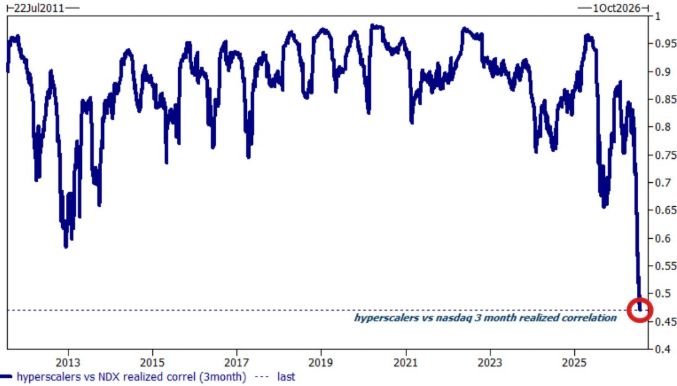
Biggest spenders have been biggest drag on S&P 500 since the start of June.
The chart below shows contribution to SPX declines versus 12 month capex estimates. Apple is the outlier. Tim Apple is leaving the company on a high note. It takes a lot of discipline not to follow the crowd - undoubtedly part of the reason why Buffett loves him. Source: Bloomberg, Negligible Capital