
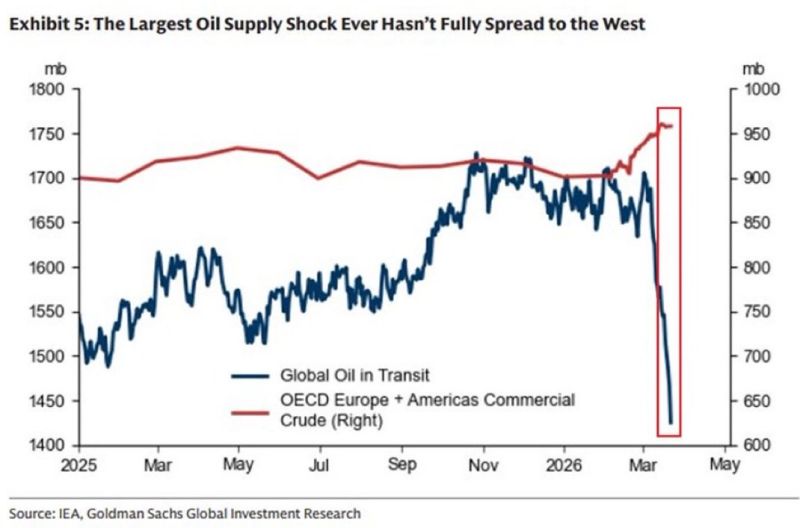
Why the West Remains Calm
Goldman Sachs explains that despite a sharp drop of 270 million barrels in global oil shipments within three weeks, Western economies remain stable. High oil inventories across OECD Europe and the Americas cushion any supply shock, preventing immediate disruption. This insulation allows major U.S. oil companies to achieve exceptional profitability even as global supply tightens. Consequently, the West is not protected but may benefit from current conditions, raising questions about who advantages from ongoing disruptions in the Strait of Hormuz. Source: Qasem Al-Ali (@AlaliQasem)
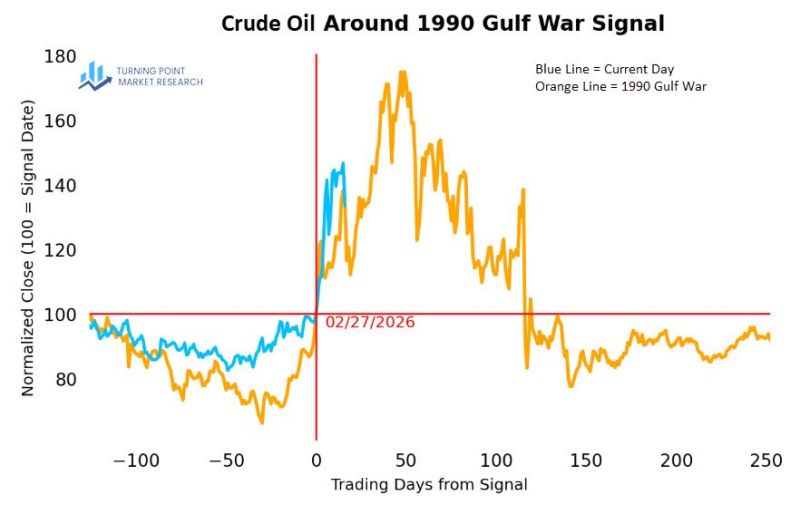
Will Oil prices continue mirroring the 1990 Gulf War analog?
Source: The Chart Report
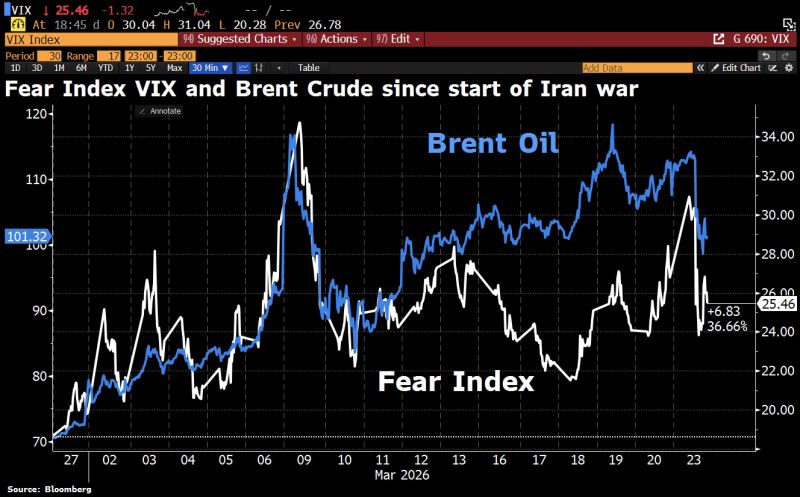
Fear index Vix tumbles w/oil on Trump’s softer Iran tone. Reality check: both still elevated vs. pre-war. This isn’t calm – it’s just less panic.
Source: HolgerZ, Bloomberg
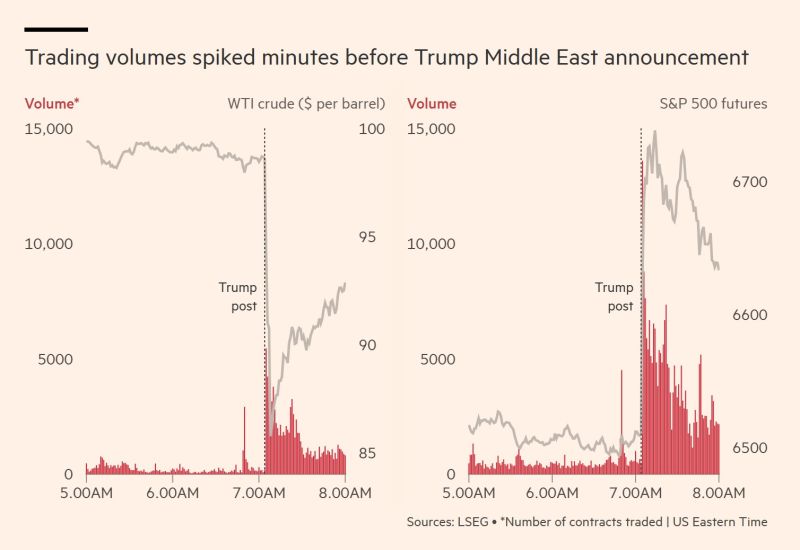
Suspicious $580M Oil Trades Precede Trump Announcement, Raising Insider Concerns
$580M in oil futures (Brent, WTI) were traded minutes before Donald Trump announced “productive talks” with Iran, triggering falling oil prices and rising global stocks. The timing fuels insider trading concerns, as unusual volumes and market moves appeared before public news. Experts call it abnormal, echoing past suspicious trades. The White House denies wrongdoing amid growing investor concern. Source: Financial Times (FT)
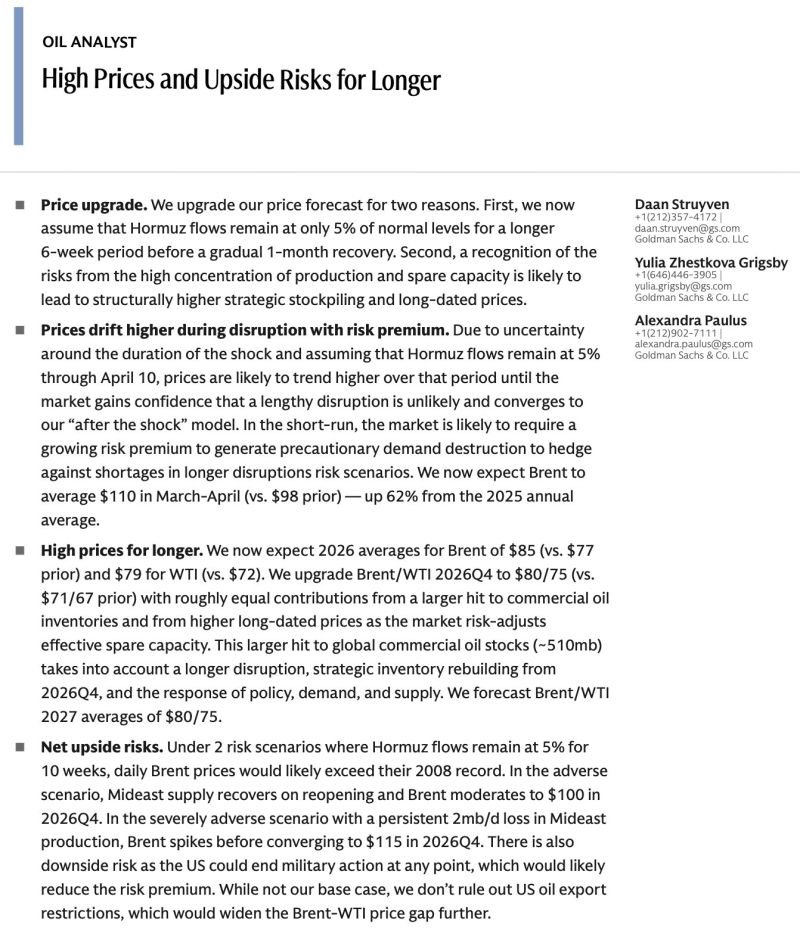
Goldman Sachs has raised its oil price forecast for the rest of this year, betting on a longer disruption to flows through the Strait of Hormuz.
Oil to average $85/$79/bbl for 2026 (up from $77/72 Brent & WTI), and $80/$75/bbl for 2027. Goldman Sachs. Source: Open Square Capital
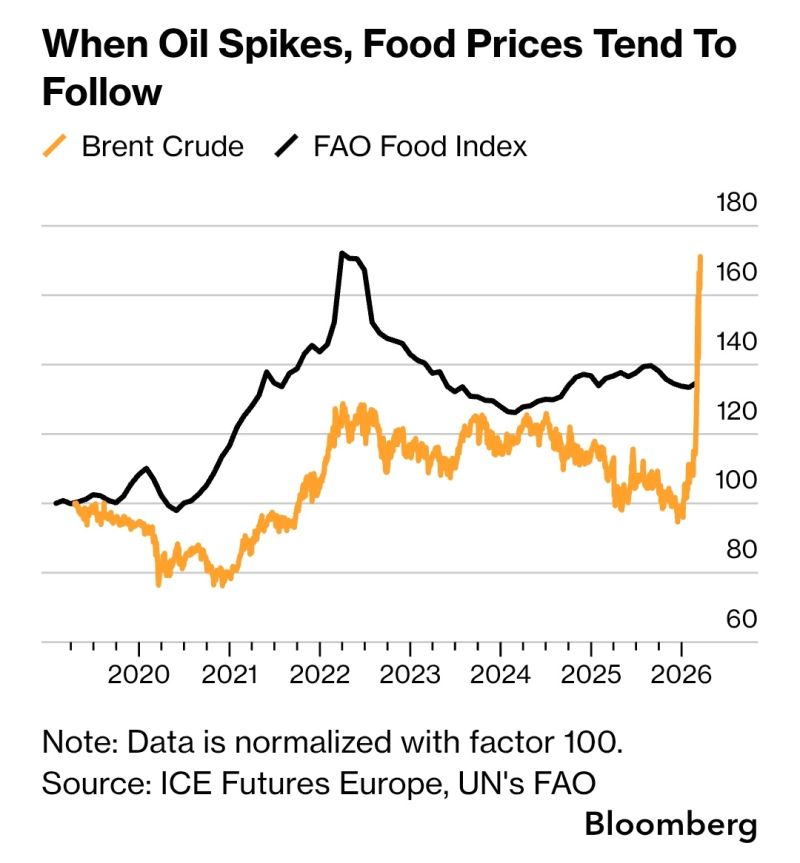
When Oil Spikes, Food Prices Tend To Follow
Source: Tracy Shuchart
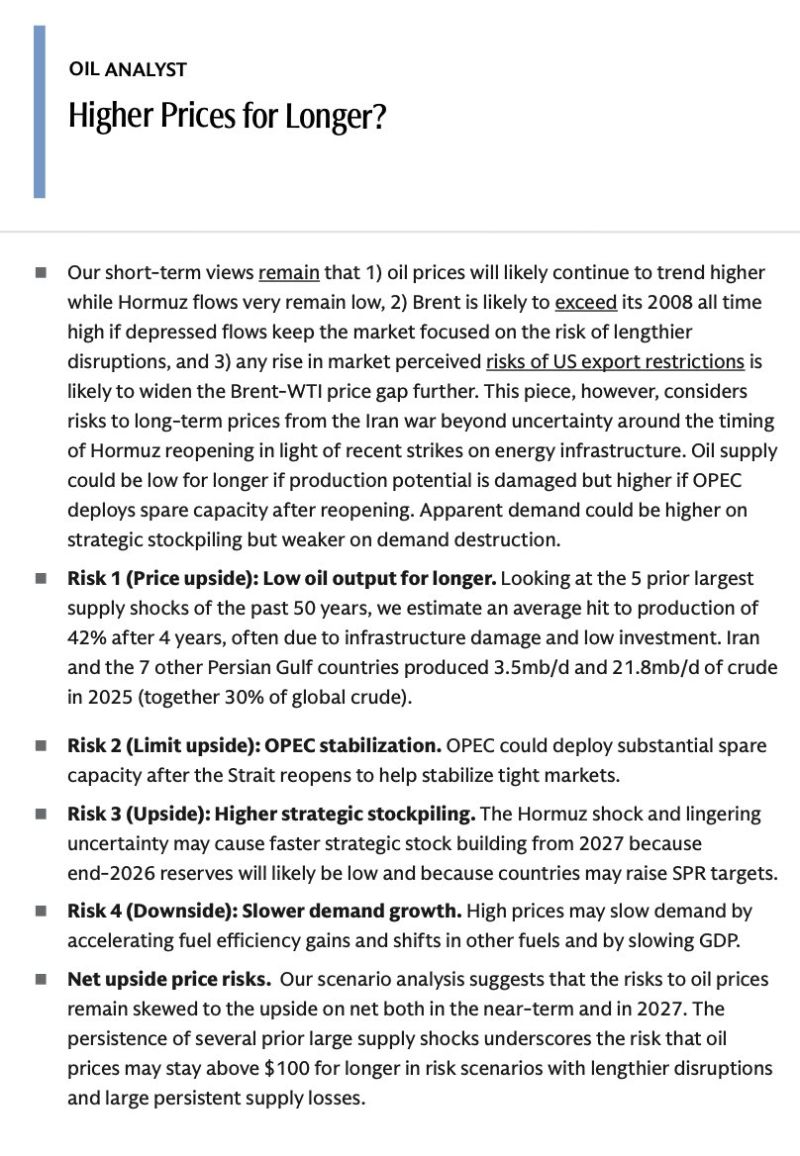
Goldman team is coming out with higher for longer for oil prices even after the "all clear" sounds and SoH is reopened.
Source: Open Square Capital
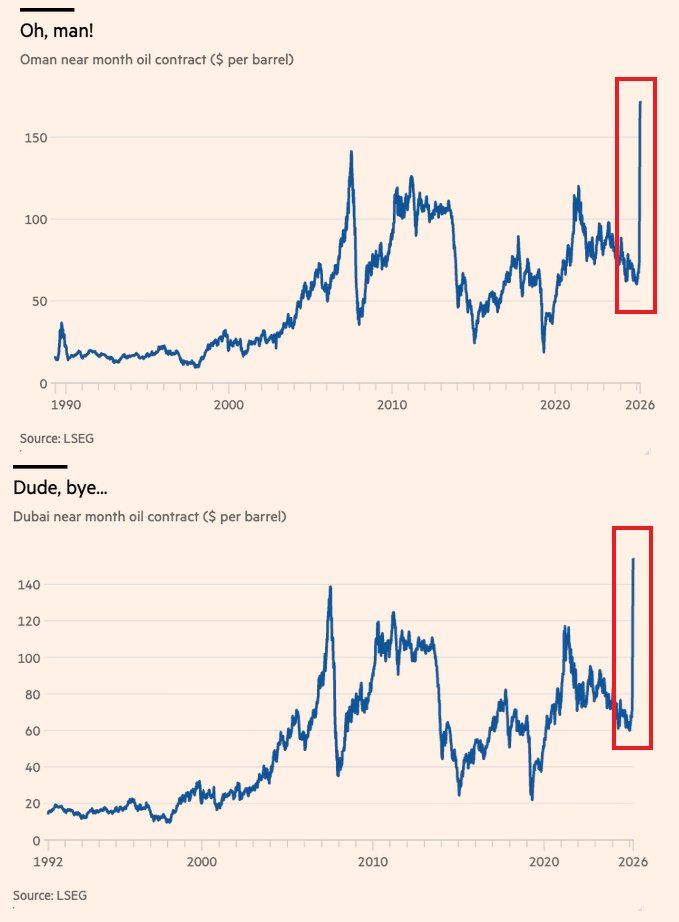
The oil market disruption is far worse than headline prices suggest:
Oman crude hit a record $173 per barrel on Wednesday, surpassing even the 2008 Financial Crisis spike. Dubai crude also surged to an all-time high above $150, as buyers scramble to replace supplies cut off by the Strait of Hormuz shutdown. The Hormuz closure has severed ~20% of the world's oil production from global markets, triggering the largest supply disruption in modern history. By comparison, Brent is trading at ~$115 and WTI near ~$95, massively understating the severity of the physical shortage. As a result, the gap between Brent and WTI is now the widest since 2013, as the Iran War disproportionately hits European oil supply. The problem is that Brent and WTI are the most commonly quoted benchmarks, but they only reflect North Sea and US supply conditions, not the Middle Eastern crisis. If the Strait does not reopen, Western oil prices will inevitably catch up, as US and European inventories are depleted and global supply tightens further. The real oil crisis has not even reached Western markets yet. Source: Global Markets, FT