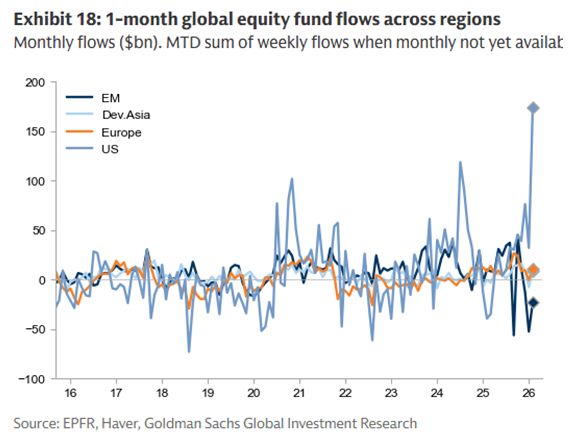

South Korea's KOSPI has crashed -6% from today's high as foreign investors continue to sell ahead of Samsung's earnings report.
Foreign investors sold ₩2,200,000,000,000 worth of Korean stocks today, marking their 11th consecutive day of net selling. Their cumulative net sales have now reached ₩157.3 trillion ($116 billion) since 2026. Samsung is set to release its Q2 earnings on July 7, with Q2 operating profit expected to surge 18x. Source: Bull Theory
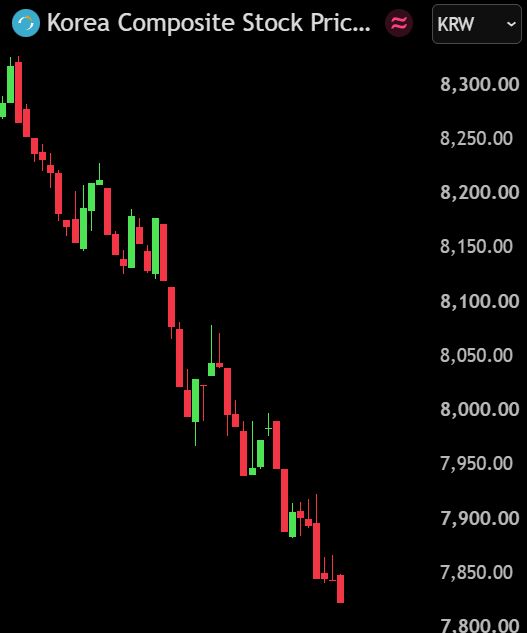
Semiconductor volatility is exploding.
The average 3-month implied volatility of the 10 largest U.S. semiconductor stocks has surged to 72%, its highest level in at least a decade—and more than double where it stood in 2016. The market is reacting fast: SOXX has fallen 14% in just a few sessions, while the leveraged SOXL ETF has plunged 40%. This is the sector that powered the AI bull market. History shows that when semiconductor volatility spikes to these extremes, markets start questioning the sustainability of the cycle. Is AI's biggest winner becoming its biggest risk? Source: Global Markets Investor, Citadel Securities
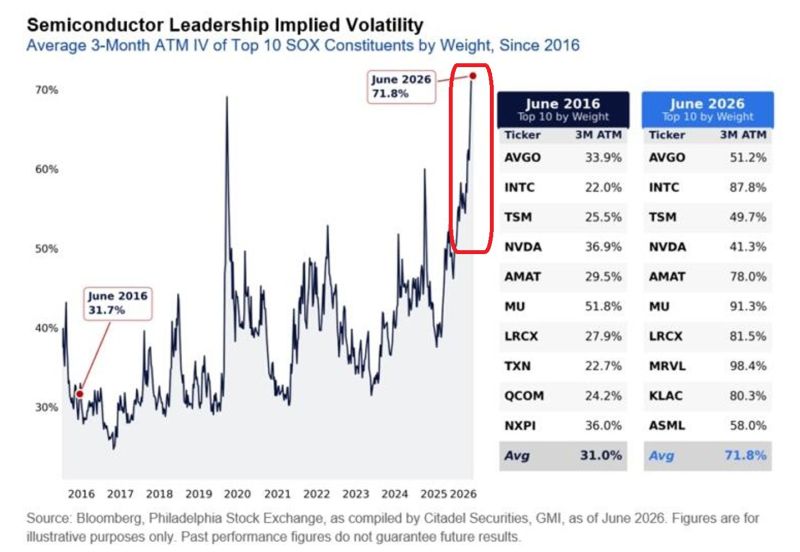
🚨US stock market concentration has never been this extreme:
Semiconductor stocks now reflect 19.7% of the S&P 500's total market cap, the most EVER. This figure has QUADRUPLED since June 2020. As a result, every other sector combined now accounts for just 80.3% of the index, the lowest share EVER. Meanwhile, the semiconductor index, $SOX, is trading now ~70% above its 200-day moving average, the widest divergence since the 2000 Dot-Com Bubble peak. How much further can this concentration stretch before something breaks? Source: Global Markets Investor
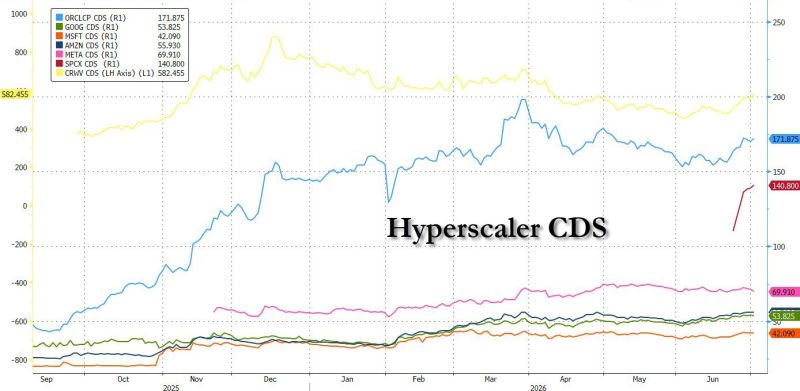
There goes credit:
CRWV, ORCL CDS blow out to 2 month wides. AMZN, GOOG, MSFT drifting wider; SpaceX at 141, up 31bps since breaking last week. Source: zerohedge
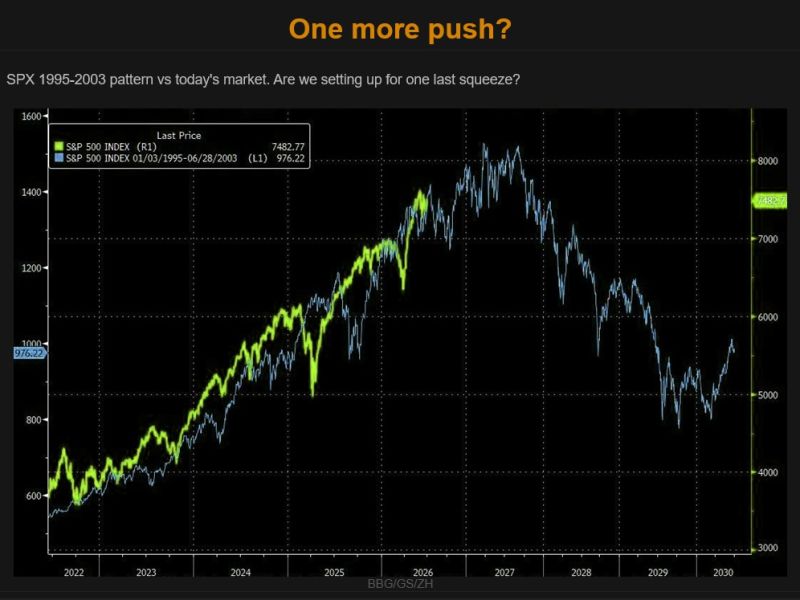
One more push?
SOX broke below the short-term trendline earlier this week and is now approaching both the 50-day moving average and the lower end of its recent trading range. Chasing momentum breakouts in either direction has been a costly strategy since mid-May, as mean reversion has consistently dominated. RSI has now fallen to its most oversold level since late May. Source: TME
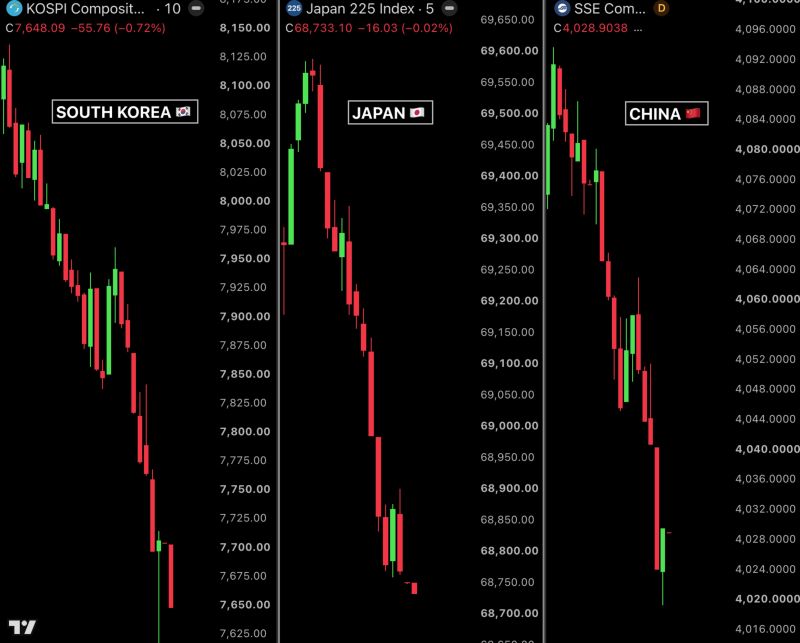
In case you missed it... 🚨 AI stock euphoria just hit a wall in Asia.
More than $730 billion in market value has been erased across Asian equity markets today as AI and semiconductor stocks came under heavy selling pressure. 🇰🇷 South Korea's KOSPI: -7.89% ($324B wiped out) 🇯🇵 Japan's Nikkei: -2.47% ($214B wiped out) 🇨🇳 China's Shanghai Composite: -2.1% ($191B wiped out) The selloff follows two major warnings over the weekend. The IMF cautioned that AI-related equity valuations have become increasingly speculative and detached from fundamentals. Meanwhile, Wealspring Asset, whose founder famously called the 2007 market peak, warned that a massive global AI bubble has formed, adding that its "collapse point may not be far away." After months of relentless optimism, markets are suddenly being forced to price in the possibility that AI expectations have run too far, too fast. Source: Bull Theory
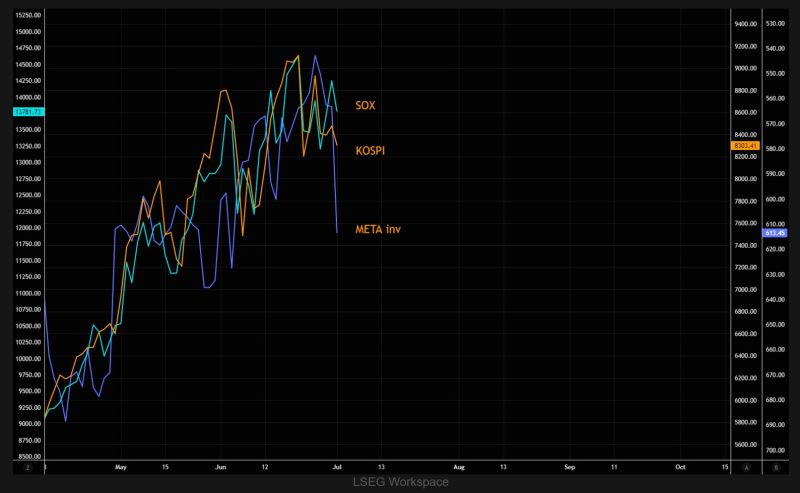
The META effect
Meta Platforms (NASDAQ:META) climbed more than 10% on Wednesday after a report said the social media company is developing a cloud computing business that would monetize surplus artificial intelligence computing capacity. Meta's plan to monetize excess AI compute may have exposed the first real crack in the AI CapEx narrative. If hyperscalers can generate revenue from spare capacity, or eventually reduce spending without sacrificing AI capabilities, the market's assumption of persistent compute scarcity comes into question. That would be a negative for the hardware and infrastructure layer, but potentially positive for hyperscalers that can monetize existing assets more efficiently (more here). Chart below shows KOSPI, SOX and META (inverted). Source: TME
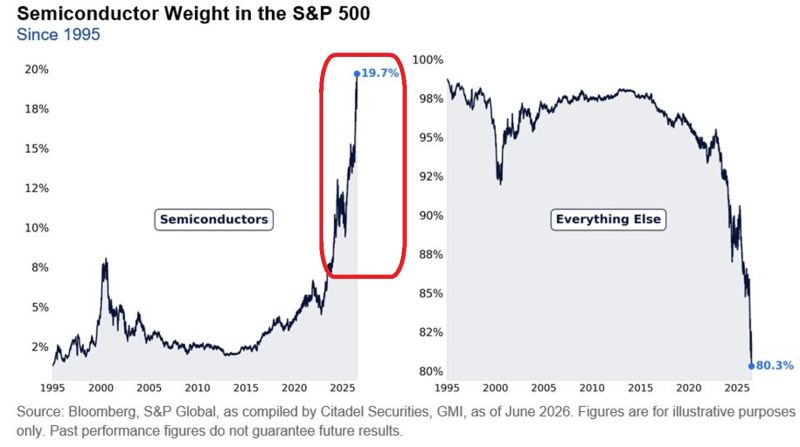
The US equity market is recording massive inflows
Source: EPFR, Goldman