
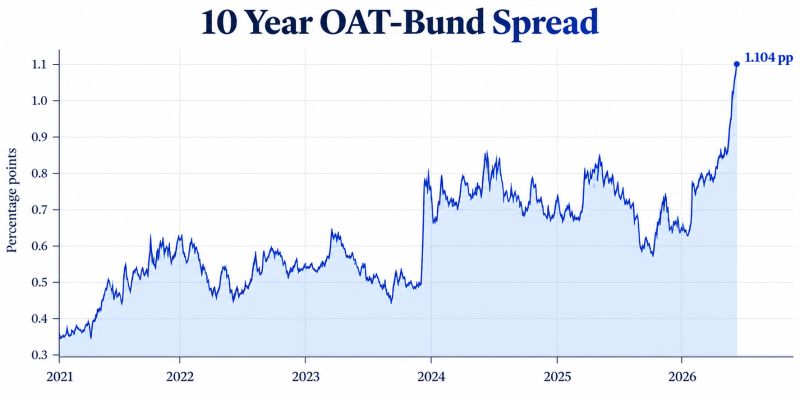
The extra yield France has to pay over Germany on 10-year debt is going vertical.
Source: Bloomberg
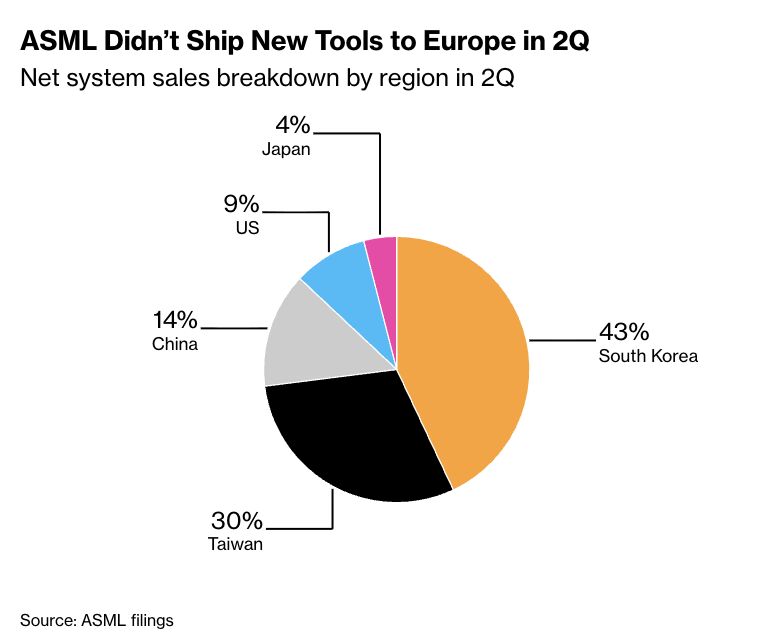
Europe's largest company $ASML which makes the machines to make the most advanced semiconductors, sold $0 worth of product to customers within Europe last quarter.
Source: Evan
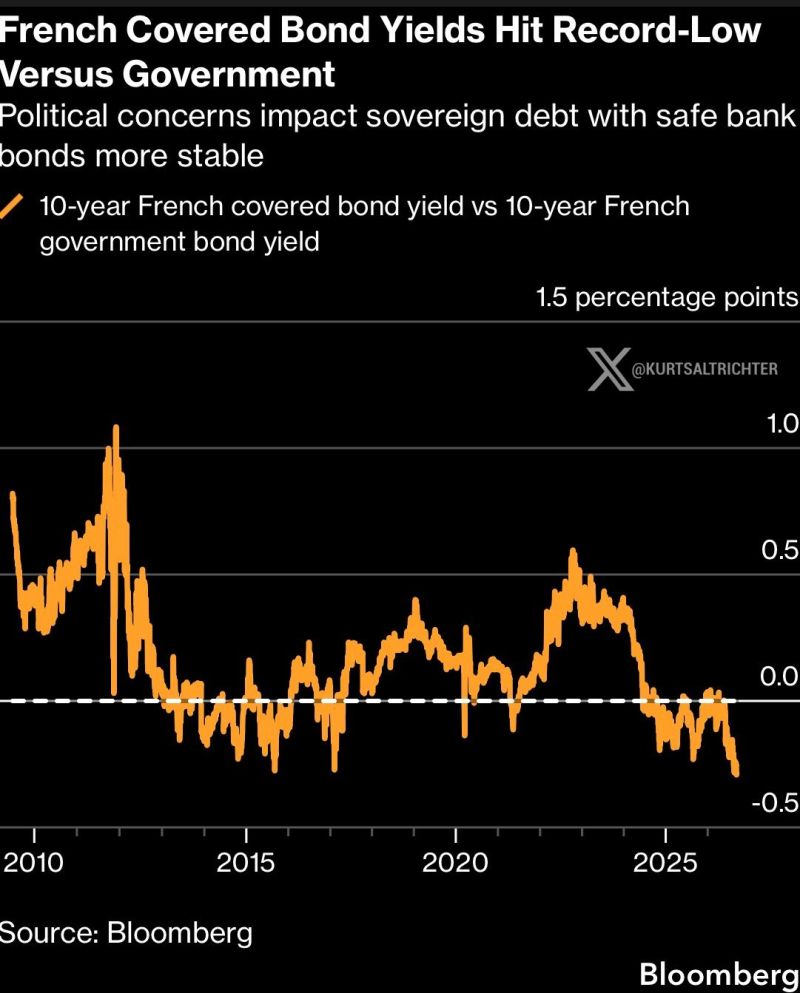
Something just broke in the French bond market.
“Safe” bank bonds now yield less than French government debt. French 10-year covered bonds—secured by ring-fenced pools of mortgages—now offer a lower yield than 10-year sovereign bonds. In other words, markets are pricing a pool of French home loans as safer than the French state itself. Why? France’s public debt has reached 117% of GDP. The government plans a record €310 billion of bond issuance in 2026. Meanwhile, the 10-year yield spread over Germany has widened to 90 basis points—the highest since 2012. This is more than a technical distortion. When government bonds trade at a discount to the bank debt they ultimately backstop, investors are sending a clear message: The sovereign balance sheet has become the risk. Bond markets often discipline governments long before voters do. Source: Kurt S. Altrichter, CRPS
Europe is entering winter with its lowest natural gas reserves in 15 years
And this was a calculated gamble. Storage facilities are just 67% full—13 percentage points below last year—as Europe bet on the Strait of Hormuz reopening and Qatari LNG supplies returning. Neither happened. Dutch gas futures are now approaching €80/MWh, while spot prices have surged 75% since June. Europe’s energy gamble is becoming America’s windfall. US LNG exporters can sell every cargo they are able to load. One region’s supply risk is another region’s pricing power. Source: Kurt S. Altrichter, CRPS

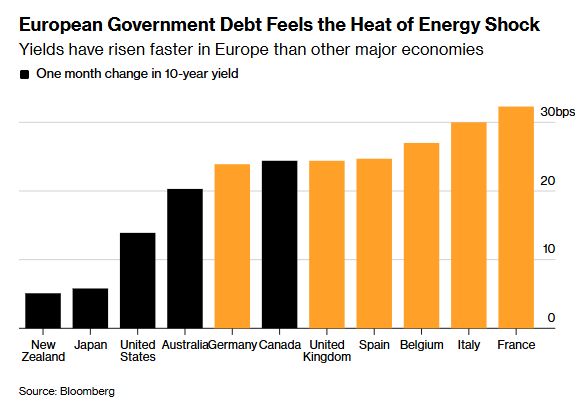
European Bonds Suffer the Most as Investors Fret About Energy and Elections
Source: Bloomberg
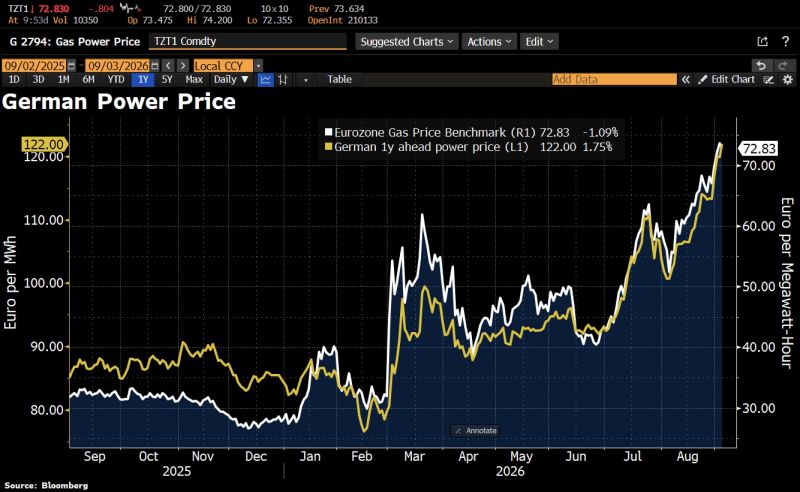
Germany’s electricity market is flashing another warning sign.
The country’s one-year forward power price has surged to €122/MWh—its highest level since 2023. This matters because the contract is a key benchmark for the procurement costs faced by household electricity suppliers. The main culprit? Surging natural gas prices. Under Europe’s merit-order system, the most expensive power plant required to meet demand sets the wholesale electricity price. And that plant is often gas-fired. So even when most electricity comes from cheaper sources, rising gas prices can lift the cost of the entire power market. The result: renewed pressure on households, businesses and Germany’s industrial competitiveness. Source: HolgerZ, Bloomberg
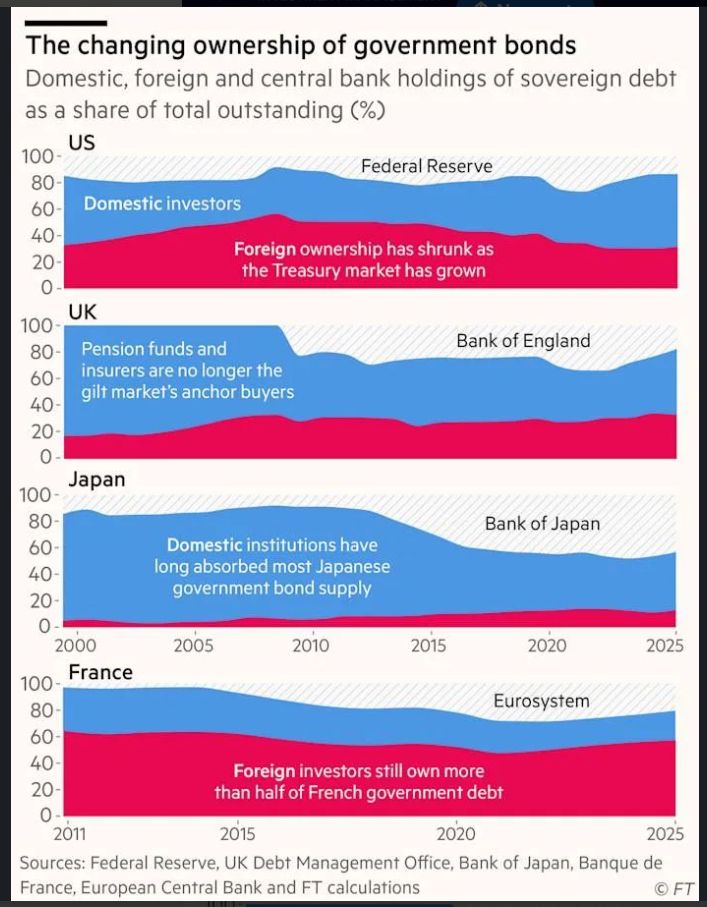
A great chart by FT on the changing ownership of government bonds. France may be the European bond market to watch!
Indeed, in light of 2027 Presidential election. foreign investors could trigger the next phase of France’s sovereign downgrade Despite repeatedly breaching EU debt and deficit limits, non-resident investors still held a striking 57% of French government debt at the end of 2025. France also benefits from the perceived safety net of the European Central Bank, with markets broadly assuming that the ECB would intervene in the event of a severe bond-market crisis. But the 2027 presidential election could put both foreign investor confidence and that ECB backstop to the test. Source: Financial Times, Christophe BESSON
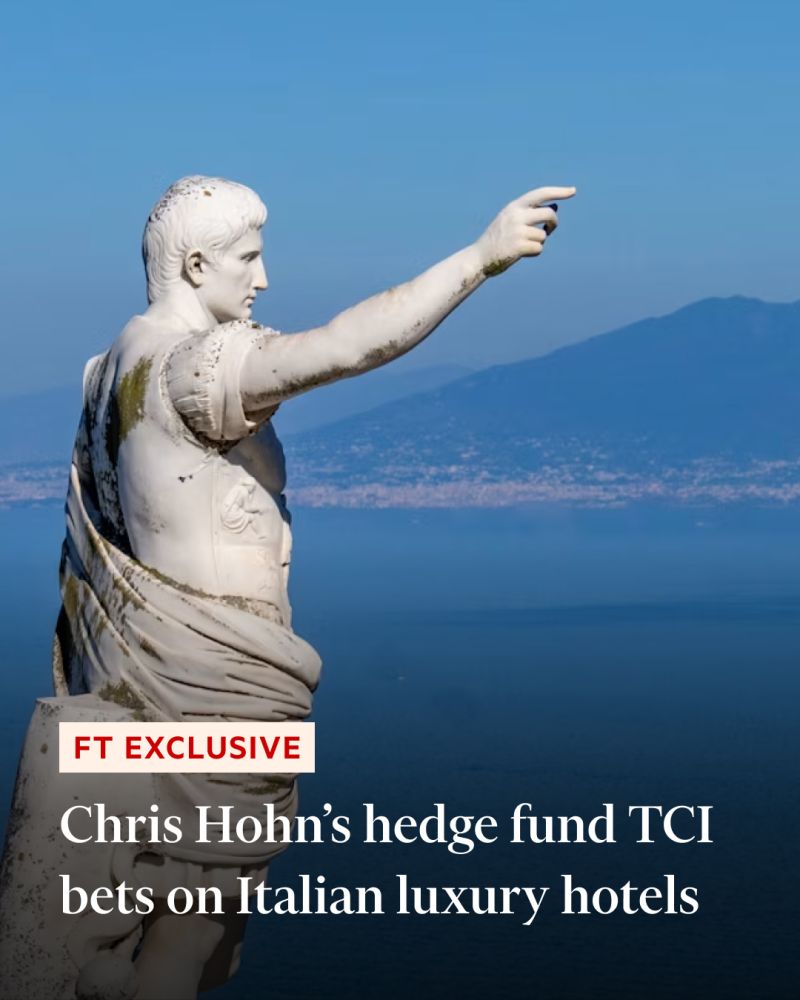
A $636M bet on Italy’s ultra-luxury hotel boom.
Billionaire investor Sir Christopher Hohn’s TCI has quietly built a major exposure to loans backed by some of Italy’s most prestigious hotels. 🏨 $392M — Hotel Danieli, Venice 🌊 $132M — Caesar Augustus, Capri 🏔️ $74M — Six Senses, Lake Como 🏙️ $38M — Mandarin Oriental, Milan The thesis is simple: scarcity + pricing power. Italy’s revenue per available hotel room surged 53% between 2019 and 2025, the strongest increase in Europe, driven largely by luxury properties. Historic palazzi, prime waterfront locations and strict planning rules mean supply cannot easily respond to booming demand from wealthy international travellers. For Hohn—an investor obsessed with businesses able to raise prices faster than inflation—ultra-luxury Italian hotels increasingly look like real-estate monopolies in disguise. And TCI is financing them. Source: FT