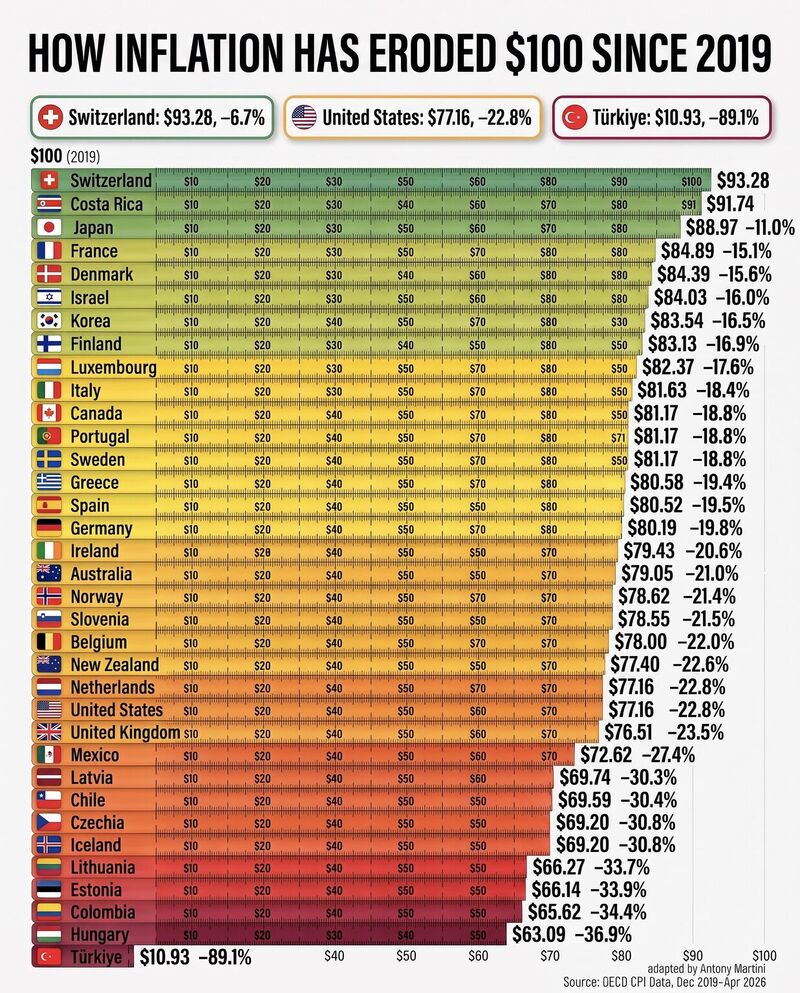

US inflation is heating up again.
Headline inflation jumped to 3.7% year-on-year in September, its highest level since May. Rising gasoline and diesel prices drove much of the increase. Higher airfares and used-car prices added pressure, pushing monthly inflation to 0.6%, the biggest gain since May. Even excluding food and energy, the picture deteriorated. Core inflation rose to 2.6%, up from 2.4% in August and above expectations. The squeeze on households is clear: prices rose 3.7% over the past year, outpacing average wage growth of 3%. Source: Heather Long on X, BLS
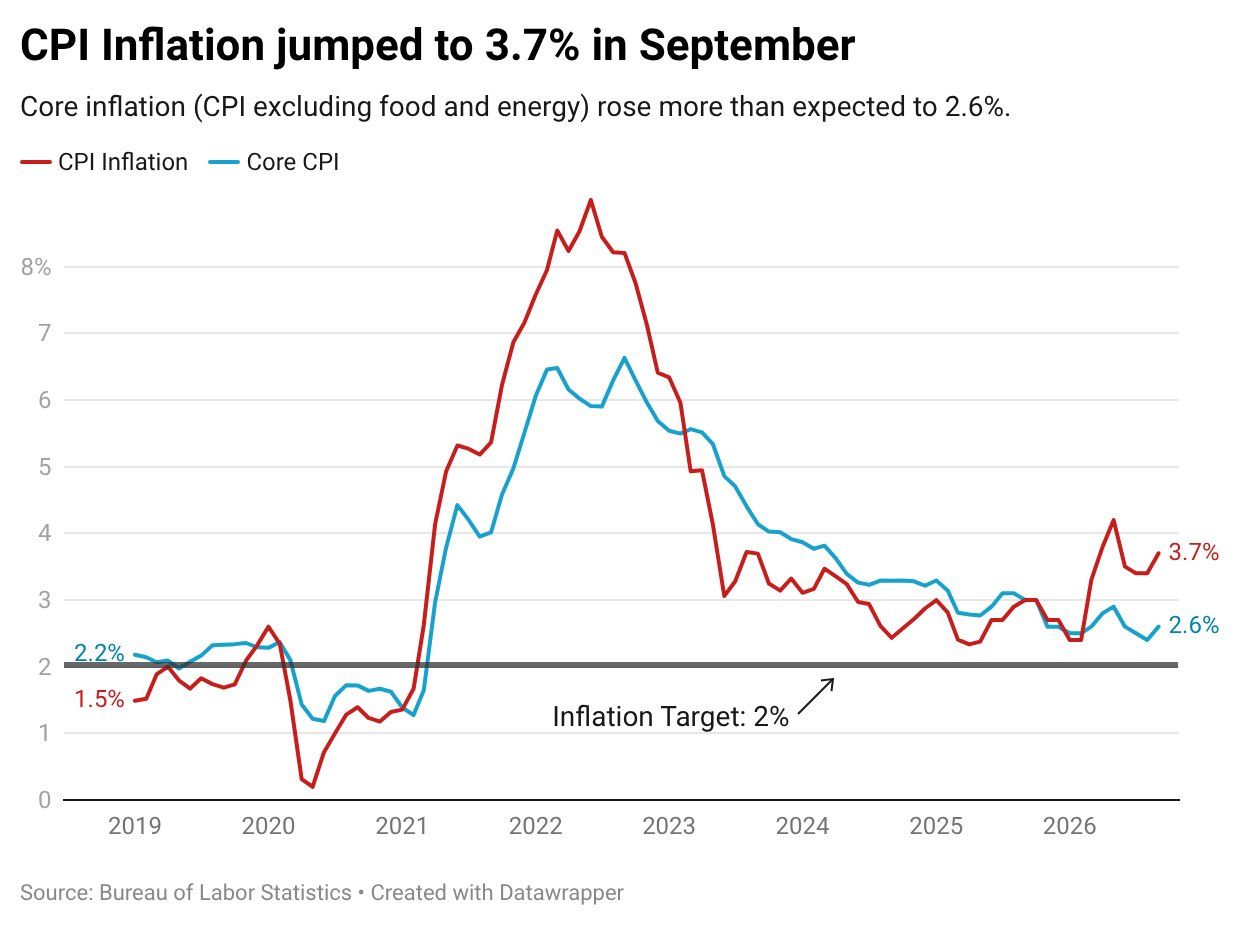
Global food prices just hit their highest level in 4 years
The UN's food price index jumped to 136 points in September, the highest since November 2022. Sugar prices rose for the 3rd straight month, up 6.1%, and cereal prices jumped 5.1% as Black Sea and Strait of Hormuz disruptions choke off supply. If this keeps up, economies depending on imported food and energy are in real danger. Source: Bull Theory
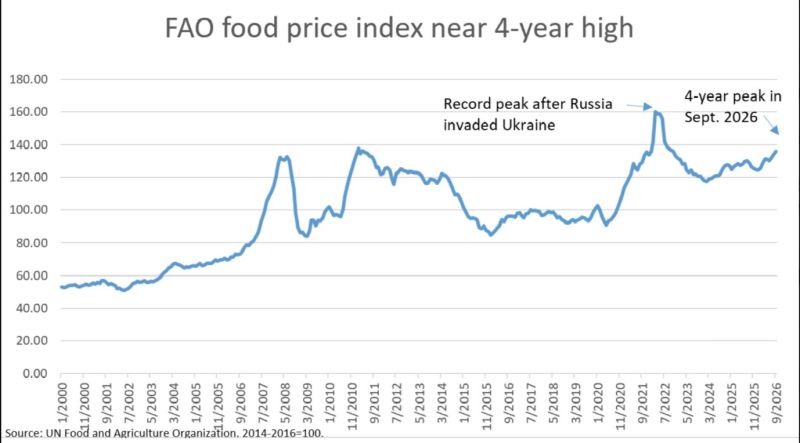
Another interesting divergence
-> UST 30Y yields (in red) are soaring -> Inflation long-term market expectations Swap Forward 5Y5Y (in green) are flat since the start of the war... Source: Bloomberg, www.zerohedge
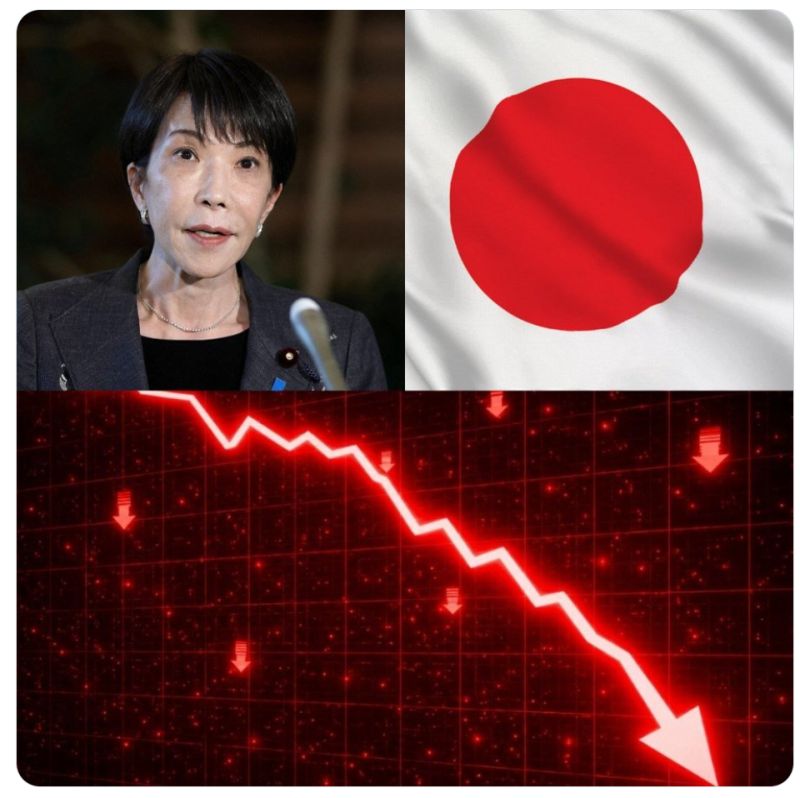
The Bank of Japan delivered a hawkish message.
The Bank of Japan reaffirmed that it will continue raising interest rates as growth and inflation evolve. Yet the yen weakened immediately after the announcement. The market’s verdict was clear: 25 basis points is not enough. Even with the policy rate now at 1.25%, the interest-rate differential remains wide—and so does the incentive to borrow in yen and invest in higher-yielding currencies. If Japan wants to support the yen without hiking more aggressively, it may have to return to FX intervention: selling dollar assets and using its reserves to buy yen. But intervention only buys time. It does not solve the underlying rate gap. The longer the BOJ waits to close that gap, the more aggressive future rate hikes may ultimately need to be. Key details: 1. BOJ voted 7-2 in favour of raising interest rates to 1.25%. 2. BOJ warns underlying inflation could rise above its 2% target. 3. Inflation pressure is spreading from producer prices into consumer prices. 4. Inflation expectations continue to rise. 5. Wage increases are increasingly being passed into selling prices. 6. Weak yen, higher oil prices and strong AI-related demand are adding inflation pressure. 7. Japan’s economy is still recovering moderately, supported by employment, income growth and AI-related demand. 8. CPI is expected to accelerate clearly above 2% from the second half of FY2026. 9. BOJ still says financial conditions remain accommodative despite the hike. 10. Future hikes will depend on economic activity, prices and financial conditions. Governor Ueda’s remarks will be closely watched for clues on the timing and pace of further hikes. Source: Bull Theory
U.S. CPI HELD STEADY, in line with expectations. Core CPI MoM came in above estimates. Wall Street will open nicely higher
• Headline CPI YoY: 3.4% vs. 3.4% expected and prior • Core CPI YoY: 2.4% vs. 2.4% expected and 2.5% prior Core inflation cooled from last month, but matched forecasts. Traders now see about 90% chance of a Fed RATE HIKE on September. CPI YoY: 3.4% vs 3.4% est CPI Core YoY: 2.4% vs 2.4% est CPI MoM: 0.4% vs 0.4% est CPI Core MoM: 0.3% vs 0.2% est Source: Coinbureau

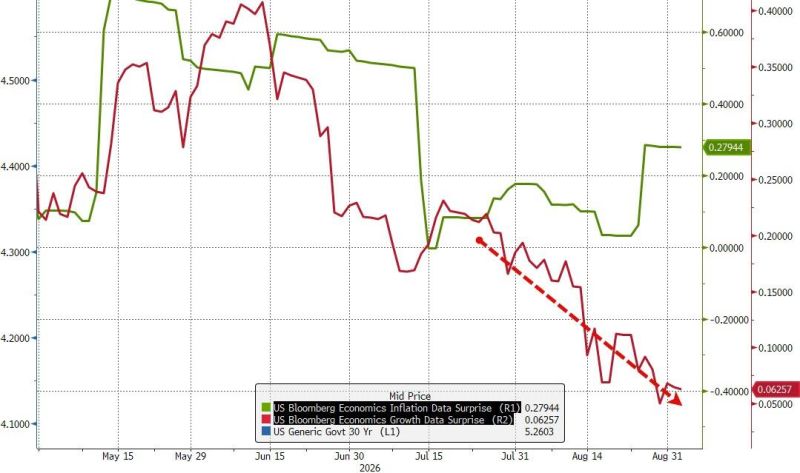
Is a growth scare coming?
In green -> US economic inflation data surprises In red -> US economic growth data surprises Source: zerohedge
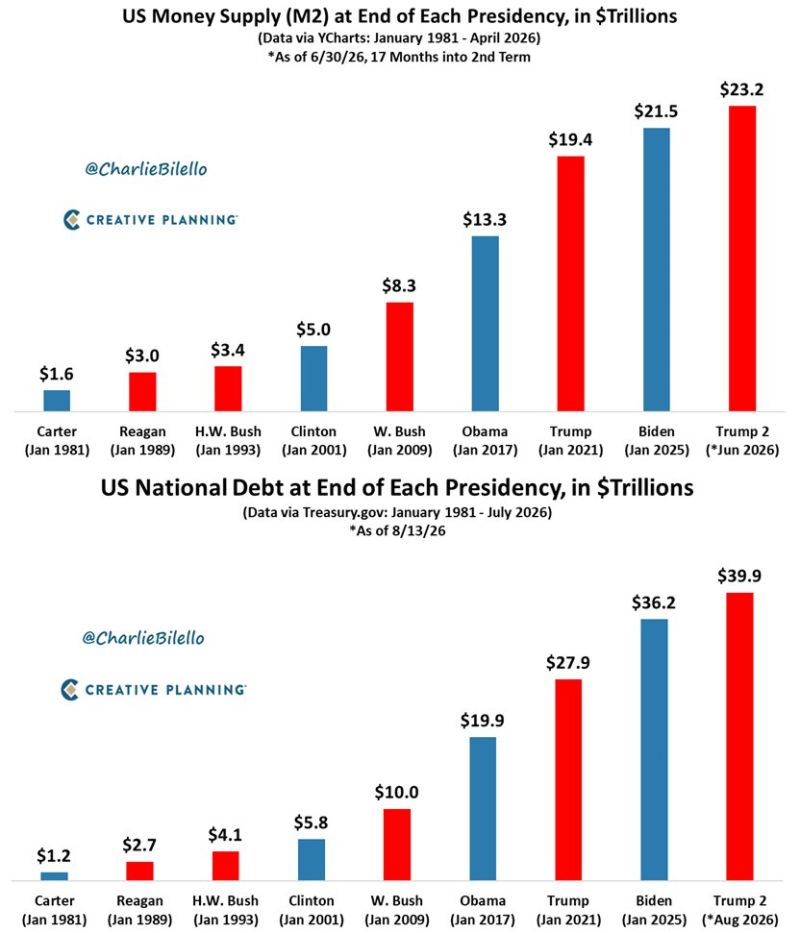
Different presidents. Different parties. Same direction.
More money printing. More debt. Higher prices. Source: Charlie Bilello
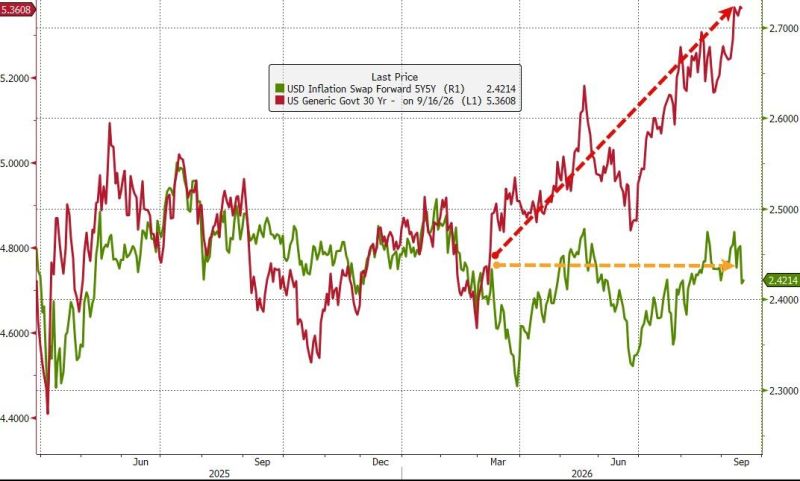
Switzerland retains $93.28 of every $100 from 2019.
The OECD gap tells a wider inflation story. E.g, the value left from a $100 budget stands at $77.16 in the U.S. In Turkey, you would have $10.93 left... Source: OECD cumulative inflation data, December 2019 to April 2026 Antony Martini