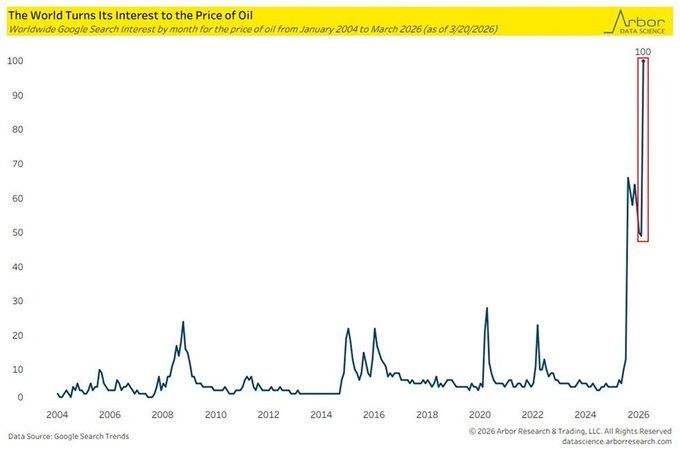

China's oil supply pre-war:
29% Other Middle East, Hormuz blocked 26% Rest of world , scrambling 20% Russia, back to sanction as US just confirmed 14% Saudi Arabia , 700K bpd offline 11% Iran, blockaded⚠️ That's 54% of China's oil either blocked, sanctioned or disrupted. Source: Jack Prandelli on X, Bloomberg
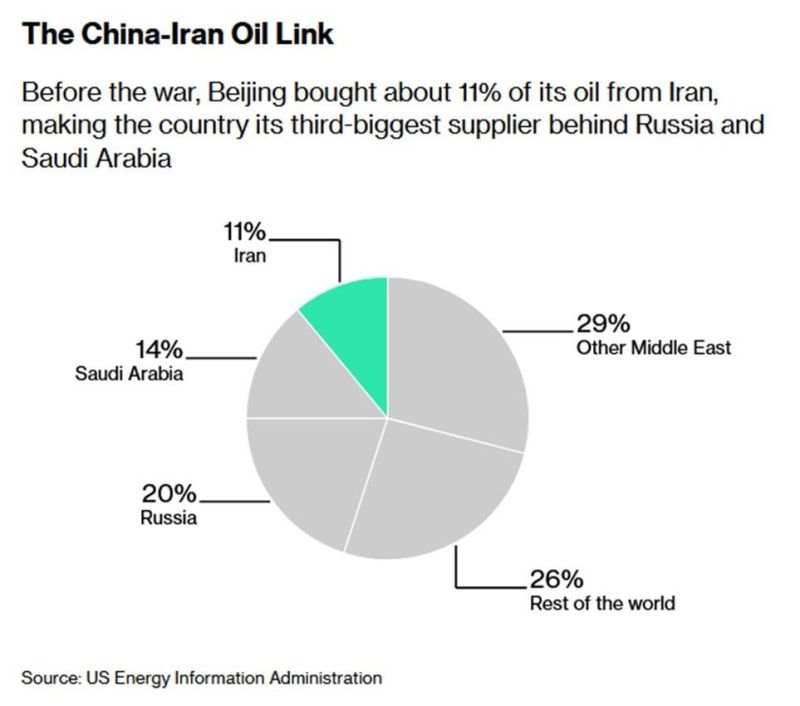
We can always use a bit of good news, right?
This chart from BofA shows that the US economy has become more and more resilient to oil shocks over time. Source: Markets & Mayhem
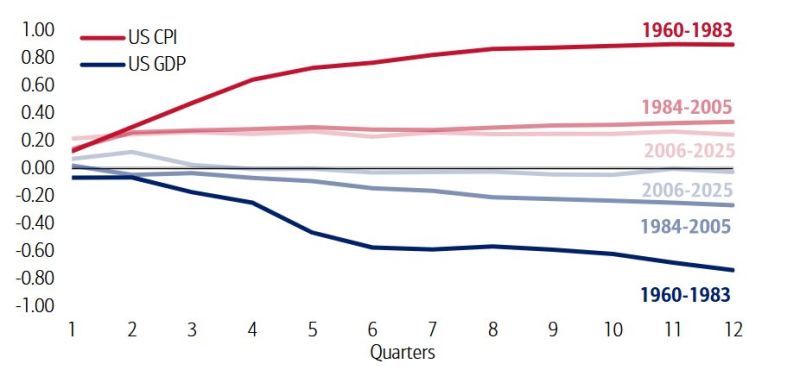
Oil and US dollar strength move in tandem, which could mitigate inflationary pressures on import prices for America.
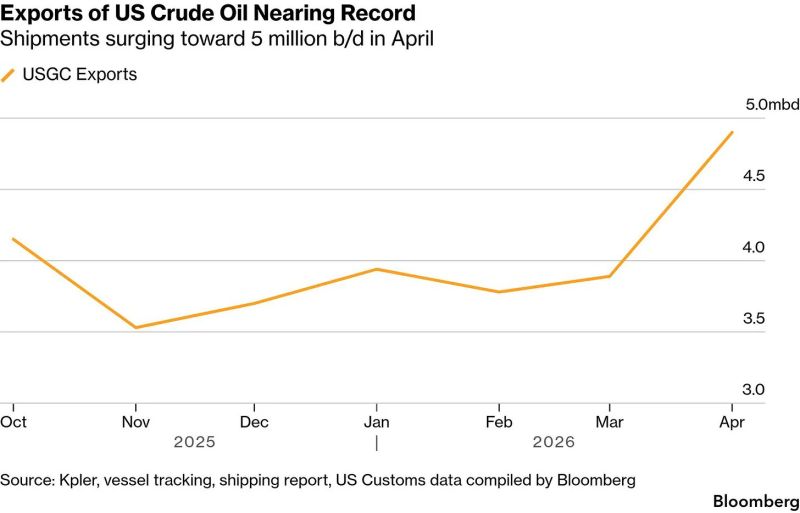
US oil exports to hit record as Iran war triggers race for supplies. Source: Daniel Lacalle on X, Bloomberg
The US naval blockade of the Strait of Hormuz is now in effect:
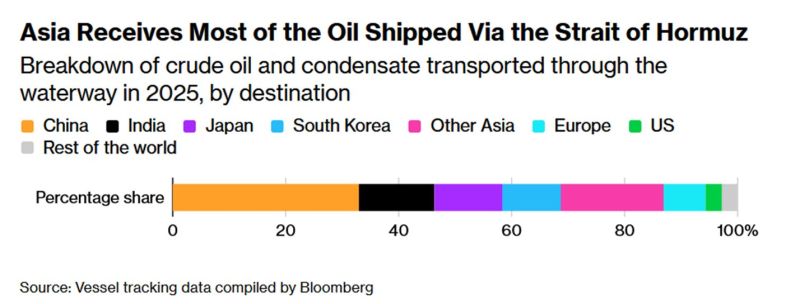
The US military began enforcing a blockade of all vessels entering or departing Iranian ports and coastal areas at 10 a.m. Eastern on Monday, while allowing non-Iran-bound traffic to transit the strait freely. Strait transits have collapsed to single digits per day, from ~135 in peacetime, and a full blockade could reduce that further. Asian nations, which rely on more than 80% of the energy that usually transits the strait, are bearing the brunt of the disruption, with downstream industries from fertilizers to packaging also taking a hit. The ceasefire expires on April 22, and the window for diplomacy is shrinking fast. Source: Global Markets Investor, Bloomberg
5.0 Million b/d US Exports Just Hit Record As Hormuz Flatlines
+23% above March.... In 1 month This isn't a coincidence. It's the market rerouting. Hormuz closes → Asian buyers panic → empty VLCCs race to US Gulf Coast → American crude fills the gap Source: Jack Prandelli on X, Bloomberg
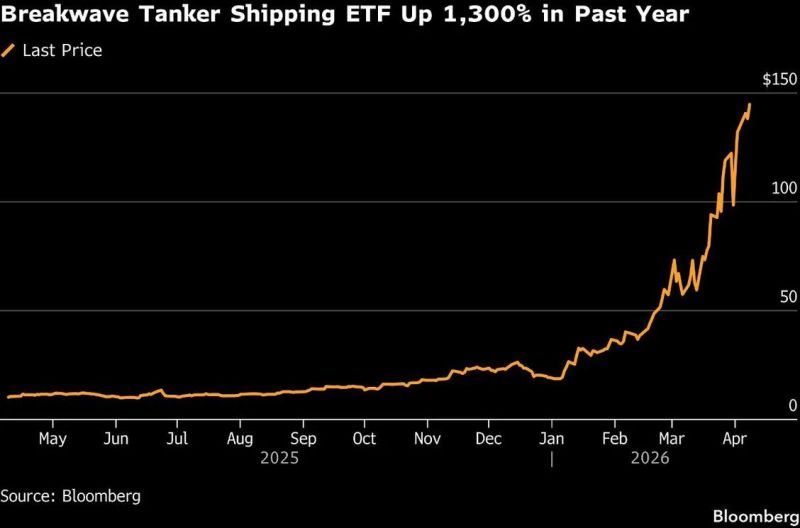
+1300% in a year, easy to think the move is done.
But as Bloomberg highlights, the Breakwave Tanker Shipping ETF (BWET) reflects deeper forces. Even before the conflict: - Aging fleet - Tight capacity - Sanctions limiting supply ➡️ The war accelerated existing trends. Now the question isn’t how far it’s gone, but what’s changed. Structural tightness remains: - Longer, more complex trade routes - Sourcing shifting farther away - Rising demand for shipping capacity ➡️ That’s why gains may not fully unwind, even with peace. As John K. notes: the story may shift from war-driven to fundamentally driven. The fundamentals still point to persistence. Source. Bloomberg
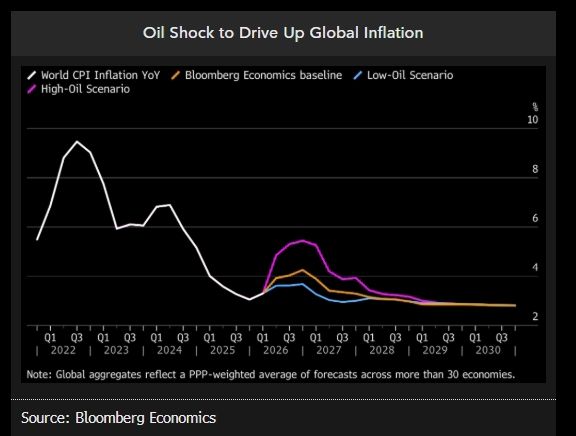
The oil shock's impact on global inflation is likely to be temporary and short-lived.
Source: Bloomberg
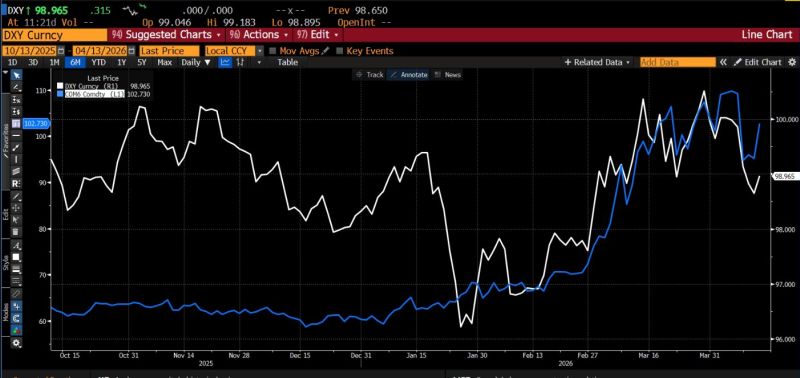
Google searches for "price of oil" just hit a record high: 300% above the 2022 Russia-Ukraine war peak and the 2008 financial crisis combined.
20 years of data. Every war, every crash, every crisis... all dwarfed by a single vertical line in 2026. The whole world is watching the pump. Source: Arbor Research, Mario Nawfal on X